
Agriculture, social services, education, defence and so on will be brought into the digital fold and every gram panchayat will be connected to the internet.

The central government's clarification on the 2 per cent equalisation levy on foreign digital operators in the Budget, which considerably expands the scope of the levy, might be challenged in court, with several companies contemplating filing a writ petition in the coming few weeks. The writs might be filed on the grounds of the levy's alleged extra-territorial overreach, as it aims to cover those entities that do not have a physical presence in India, going against international taxation rules.

The discount will be by way of cash back which will be credited to the buyer's account in three days from the transaction
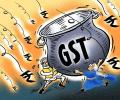
Gross GST collection grew 9 per cent to over Rs 1.87 lakh crore in October on higher revenues from domestic transactions. The Central GST collection stood at Rs 33,821 crore, State GST at Rs 41,864 crore, Integrated IGST at Rs 99,111 crore and cess at Rs 12,550 crore.
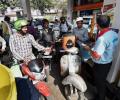
Credit card payments to buy fuel at petrol pumps will from October 1 not get a 0.75 per cent discount that State-owned oil companies had introduced more than two-and-a-half years back to promote digital payments.

Modi also asked people to take 10 pledges, including helping at least one poor family to raise its socio-economic status.

Don't recharge your phone at public outlets -- carry a power bank instead. Avoid clicking on links sent by 'friends'. If you get into an online sexual encounter with a stranger and get blackmailed, refuse to pay up.
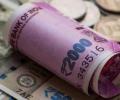
For the first time, the value of card and mobile payments of Rs 10.57 trillion was more than ATM withdrawals of Rs 9.12 trillion in Q4 of fiscal 2019-20. In the months of lockdown, the gap may have widened further, but cash could be back in vogue when the situation normalises.

The Enforcement Directorate on Tuesday questioned former Indian cricket team captain and Congress leader Mohammed Azharuddin for over nine hours in a money laundering case linked to alleged financial irregularities in the Hyderabad Cricket Association, official sources said.

India's huge digital prowess and potential will play a huge role in enabling digital lending, says Romita Majumdar.

The average ticket size (ATS) of all transactions on United Payments Interface (UPI) in H1 2023 was pegged at Rs 1,604, marking a 10 per cent decline, compared to Rs 1,774 in H1 2022, according to data from Worldline India's Digital Payments Report. The reduction in the overall ATS on UPI is a good sign, suggesting a deeper embedding of UPI as it is being used for smaller or micro-transactions, and the dip is driven by the growth in person-to-merchant (P2M) transactions, the report said. The ATS of P2M transactions dipped 21 per cent from Rs 839 in H1 2022 to Rs 659 in H1 2023.

Shine Jacob & Karan Choudhury highlight the red flags raised by the Controller General of Accounts.

'United Health Interface is in line with UPI. UPI is a language of money transfer, similarly, UHI is a set of protocols, which is going to create a language of health service delivery'

It said the searches that were launched on July 22 in nine cities like Bhopal, Indore, Delhi, Ahmedabad, Noida and some others are "continuing and further investigations are in progress."

Metropolis Healthcare (MHL) has decided to acquire a 100 per cent stake in Gurgaon-based Core Diagnostics for Rs 247 crore. This is about 2.2x FY24 (financial year 2023-24) enterprise value (EV)/sales and estimated 14x FY26 EV/Ebitda for the deal.

Downloading songs, movies, books? You may have to pay tax on it.

The total amount of fraud reported by banks showed a drop in 2020-21 - for the first time in eight years - though there is an emerging trend of private sector banks reporting a larger number of frauds related to card and internet banking. According to the latest data released by the Reserve Bank of India, commercial banks reported Rs 1.38 trillion of frauds in 2020-21, as compared to Rs 1.85 trillion in the previous year. The first half of the current fiscal year saw banks reporting frauds worth Rs 36,342 crore.

So far this year, bankers have earned Rs 1,226 crore for handling 45 IPOs, which together mobilised Rs 48,363 crore.

'Credit card debt comes with high interest cost and stringent penalties.' 'If you do not repay on time, the costs balloon.'

Citing various macroeconomic parameters that are doing pretty well, India's G20 Sherpa and former CEO of Niti Aayog Amitabh Kant projected that the country is all set to overtake Japan as 4th largest economy in the world by 2025. The size of India's GDP is currently ranked 5th, after the US, China, Germany, and Japan. It overtook the UK in 2022.

The RBI said the payment systems landscape will continue to change with further innovation and entry of more players which is expected to ensure optimal cost to the customers and freer access to multiple payment system options.

The Reserve Bank of India (RBI) on Wednesday proposed to make interoperability mandatory for digital payments firms. It also allowed users to withdraw cash from e-wallets and fintech companies to process RTGS and NEFT transactions. The RBI expressed dissatisfaction over prepaid payment instruments' (PPIs') failure to migrate towards full-KYC (know your customer) PPIs, and therefore interoperability, even two years after guidelines were issued.

India should not be left behind. It should join the seven central banks which are studying feasibility and safeguards necessary to eliminate risks, particularly from hacking, advises former foreign secretary Shyam Saran.

The National Payments Corporation of India (NPCI) has granted approval to Paytm to onboard new UPI users, subject to the adherence to all procedural guidelines and circulars, according to the company. The move is expected to come as a relief to Paytm, which had suffered a blow following the Reserve Bank of India's restrictions earlier this year on associate company Paytm Payments Bank Limited (PPBL) in onboarding new UPI users on the Paytm app. In March, the NPCI gave approval to Paytm to participate in UPI as a Third-Party Application Provider (TPAP).

Start-ups such as Max Wholesale, Jumbotail and ShopKirana are helping them place orders, maintain inventory, optimise delivery routes and make payments, all digitally.

Private sector lender HDFC Bank on Thursday said the Reserve Bank of India (RBI) has asked it temporarily stop all launches of its upcoming digital business-generating activities and sourcing of new credit card customers after outage at its data centre which impacted operations last month.

She has shown shrewdness, sensitivity, and courage. All of these will be needed in ample quantities for the real challenge that will emerge after the elections, notes Shreekant Sambrani.

'A lot of them are converted to other tokens, and since crypto is dealt with internationally, it can go to any exchange in any country.'

Walt Disney Co and Reliance Industries on Wednesday announced signing of binding pacts to merge their media operations in India to create a Rs 70,000 crore behemoth. Reliance and its affiliates will hold 63.16 per cent in the combined entity while Disney will hold the remaining 36.84 per cent, the companies said in a statement.

Competition Commission of India on Wednesday said it has approved the merger of the media assets of Reliance Industries and Walt Disney Co to create the country's largest media empire. The deal, announced six months ago, has been cleared by the CCI with certain modifications proposed by the two parties.

The charges would apply to savings as well as salary accounts

The department raided more than 35 premises in Maharashtra's capital city on February 25, and the Central Board of Direct Taxes (CBDT) said in a statement on Thursday that 'preliminary investigation indicates that these contractors have evaded income to the extent of Rs 200 crore on account of...malpractices'.

Paramount Global has agreed to sell its 13 per cent stake in its Indian TV business to Reliance Industries for Rs 4,286 crore, the Indian firm said on Thursday. In a stock exchange filing, Reliance said it has signed a binding agreement with two subsidiaries of Paramount Global to acquire 13.01 per cent equity stake of Viacom 18 Media Private Limited held by Paramount Global. Similarly, in a filing on the US Securities and Exchange Commission (SEC), Paramount Global said the closing of the transaction is subject to the satisfaction of certain customary conditions, including receipt of applicable regulatory approvals, as well as the completion of a previously announced joint venture involving Reliance, Viacom18 and Star Disney.

In a business friendly move, the Reserve Bank of India on Friday said that the Real Time Gross Settlement (RTGS) system, used for large value transactions, will be made available round-the-clock in the next few days. In December 2019, the National Electronic Funds Transfer (NEFT) system was made available on a 24x7x365 basis. Currently, RTGS is available for customers from 7.00 am to 6.00 pm on all working days of a week, except second and fourth Saturdays of every month.

The Big Four accounting firms have increased the hiring of people from technology backgrounds in India amid an increased focus of clients on digital transformation, especially after the Covid-19 pandemic. EY India said that it has expanded its overall tech talent pool by 3x in the last three years across service lines including consulting, tax, assurance, and strategy & transactions. "Today over 50 per cent of our workforce is from STEM (science, technology, engineering and mathematics) and technology background," it said, adding that it continues to hire significantly in the areas of AI, cloud computing, data analytics and cybersecurity to help its clients in transformation.

V G Mathew, managing director and chief executive officer of South Indian Bank speaks to Gireesh Babu, about demonetisation impact, rights issue and future plans.

India SME Forum, an organisation for small and medium businesses, has called for creating a dedicated fund of Rs 5000 crore for the export capacity development, promotion, and marketing of Micro, Small & Medium Enterprises (MSMEs) in its Budget recommendation. The forum for MSMEs with over 98,000 members said that to enhance India's global competitiveness and increase its market share in global exports, it was "crucial to increase the number of active exporters and enable at least 3-4 lakh first-time micro, small, and medium exporters while supporting them in promoting Indian products globally."

Any forced attempt to achieve anything, however lofty the goal, will result in distortions and undesired outcomes, say Anshuman Gupta and Karunakar Jha.

The project is expected to be activated by the end of this month.
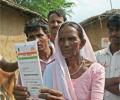
A Cabinet note is expected to be moved to use Aadhaar numbers for electronic Know Your Customer verification of mobile subscribers.
